
There are places you visit, and places you have to earn your way into. Knoydart is one of them.
At the end of the peninsula’s main road stood our hunting lodge, alone in the landscape, with no other house in sight. For a week, it became our world. Life seemed to follow a different rhythm. We never knew what tomorrow would bring — whether the weather would let us travel, whether the rain would return, or what food would remain.
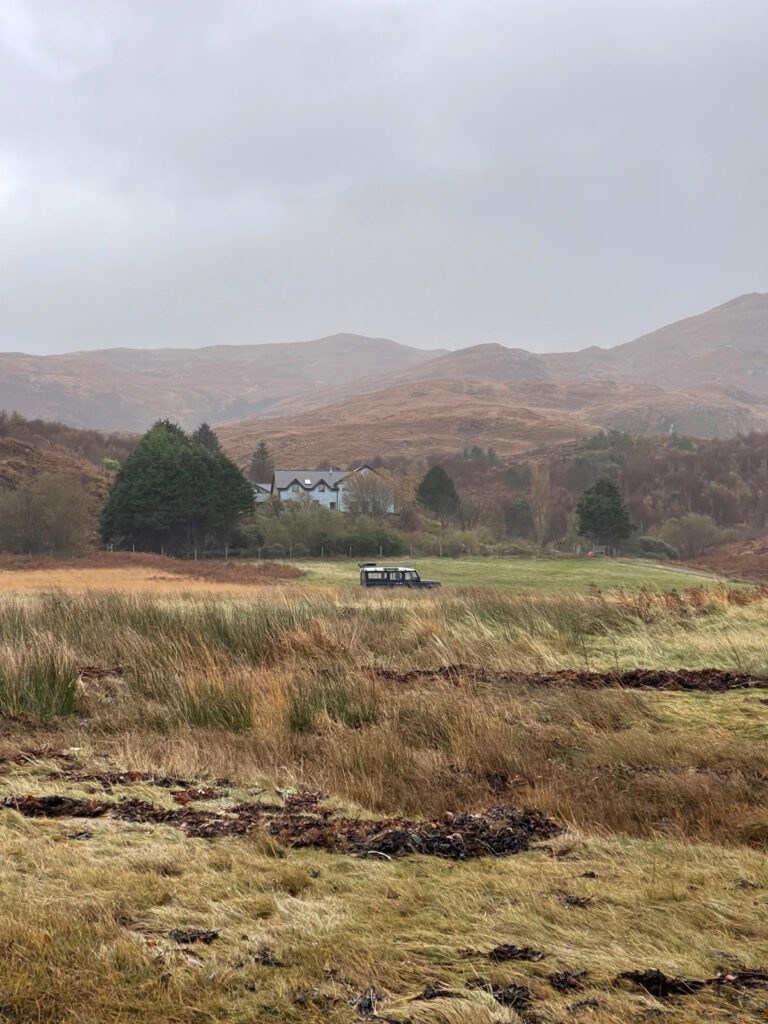
We travelled by Land Rover, the community’s most common vehicle, crossing peatlands, streams and small bridges to reach places constantly changed by the tides.
Everywhere, the light moved fast. At low tide, enormous rocks emerged from the water and familiar shores became entirely different landscapes. It was as if Knoydart kept revealing another version of itself, moment after moment.
Crossing the moors, we encountered two beautiful wild horses. Large and powerful, they came towards us as the first signs of the approaching storm appeared. For a moment, the scene felt suspended between stillness and something yet to come.
Behind an old sawmill, a slippery woodland led me to a small waterfall surrounded by an almost unreal intensity of moss and colour.
Further into the glen, Loch Nevis appeared beneath gathering clouds. The mountains darkened, their reflections deepened, and the last light seemed to hold the landscape together.
Then the storm arrived. The road to the Sound of Sleat had begun to feel like a journey into another place.
By the time I reached the shore, the rain was relentless. I walked several kilometers, alone, with the sound of the sea somewhere beyond the weather. Nothing suggested that the journey had been worth it. Then the light began to change. The rain remained, but somewhere behind me the sky was opening. I stopped, put down my equipment and began to prepare for the moment. I was so absorbed by what was unfolding beyond the water that I barely noticed anything else.
Until I saw it.
There, almost beside me, was what remained of an animal. Nothing but a bleached skeleton.
For a few seconds, I did not move.
I looked towards the hills, then behind me, suddenly aware of how far I was from everything familiar. I listened. The wind. The sea. Nothing else.
Eventually, the feeling passed.
I raised the camera again, but this time I changed my composition. What had first seemed like a landscape became something else — a meeting between beauty and mortality, between the violence of the weather and the extraordinary calm that followed.
The storm eventually passed. The sun returned, and the landscape fell into silence.
There was nothing left to do but contemplate on a solitary bench.
For those few days, the disconnection was complete. Perhaps this is what Knoydart gives you: the rare feeling of standing before something vast and timeless, long enough for the light to change, for the world to fall away, and for yourself to become part of the silence.